
Where should a porta potty go on a job site?
Pick flat, firm ground within reach of a service truck, away from storm drains, and clear of any spot where the door swings into foot traffic. Placement guidance for construction sites starts with the same rule crews use nationwide: locate units close enough to work areas that OSHA 1926.51(c) toilet counts actually get used, but far enough from dumpsters and material stacks that servicing one doesn't block the other. In Aurora, that often means a gravel pad near the site trailer rather than the muddy edge of a foundation pour. A standard porta potty rental sits about 44 by 48 inches on the ground and stands roughly 92 inches tall, so give it a footprint with a few extra feet on every side for the door and for the pump truck's hose reach. If the site also runs a roll-off dumpster rental, keep the two units separated. A dumpster placement permit from the city may apply depending on whether the container sits in the right-of-way, and dumpster placement permit cost varies by zone, so check with Aurora before either unit lands on a street or sidewalk. If you're unsure how many units the site needs before you site them, our guide on how many porta potties you need walks through crew size first.
What are the ADA placement requirements?
An ADA unit needs a 60 inch turning circle in front of it and a route at least 36 inches wide leading to the door, per ADA Standards 304.3.1 and 403.5.1. That's the short answer, and it drives everything else about where the unit goes. The door itself needs a 32 inch clear opening under ADA Standards 404.2.3, and the ground underneath has to be stable and slip resistant per ADA Standards 302.1, which usually rules out loose gravel or soft turf for that specific unit. Where you've clustered several units together, at least 5 percent, and never fewer than one, has to be the accessible model, per ADA Standards 213.2. Reach heights matter too: controls and paper dispensers inside an ADA accessible porta potty fall within the 15 to 48 inch reach range under ADA Standards 308.2.1, and any latch or lock has to open with one hand and under 5 pounds of force per ADA Standards 309.4. If a ramp is needed to reach the pad, slope can't exceed 1:12 per ADA Standards 405.2. Full detail lives on our ADA restroom requirements page.
Can a porta potty sit in the public right-of-way in Aurora?
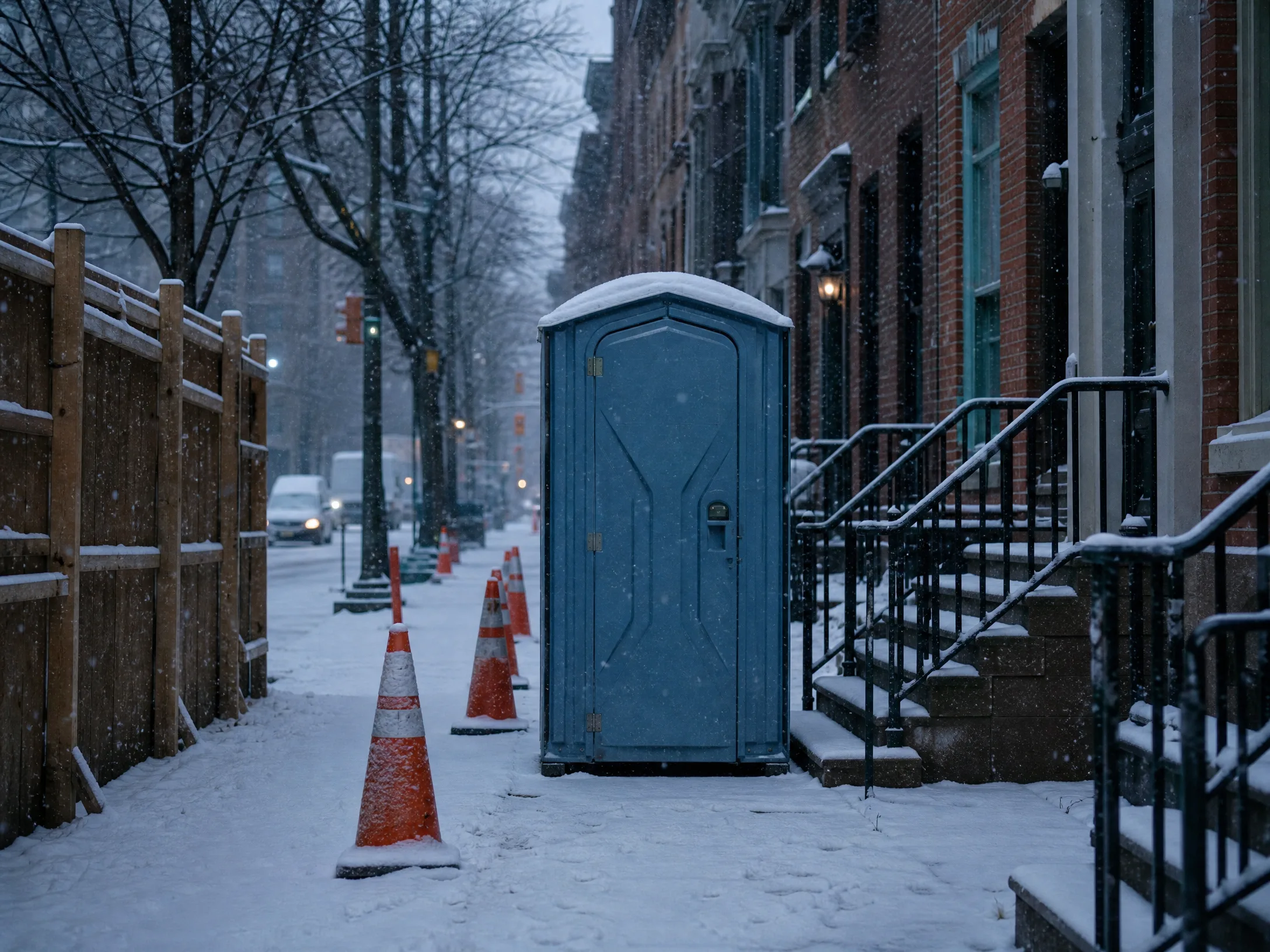
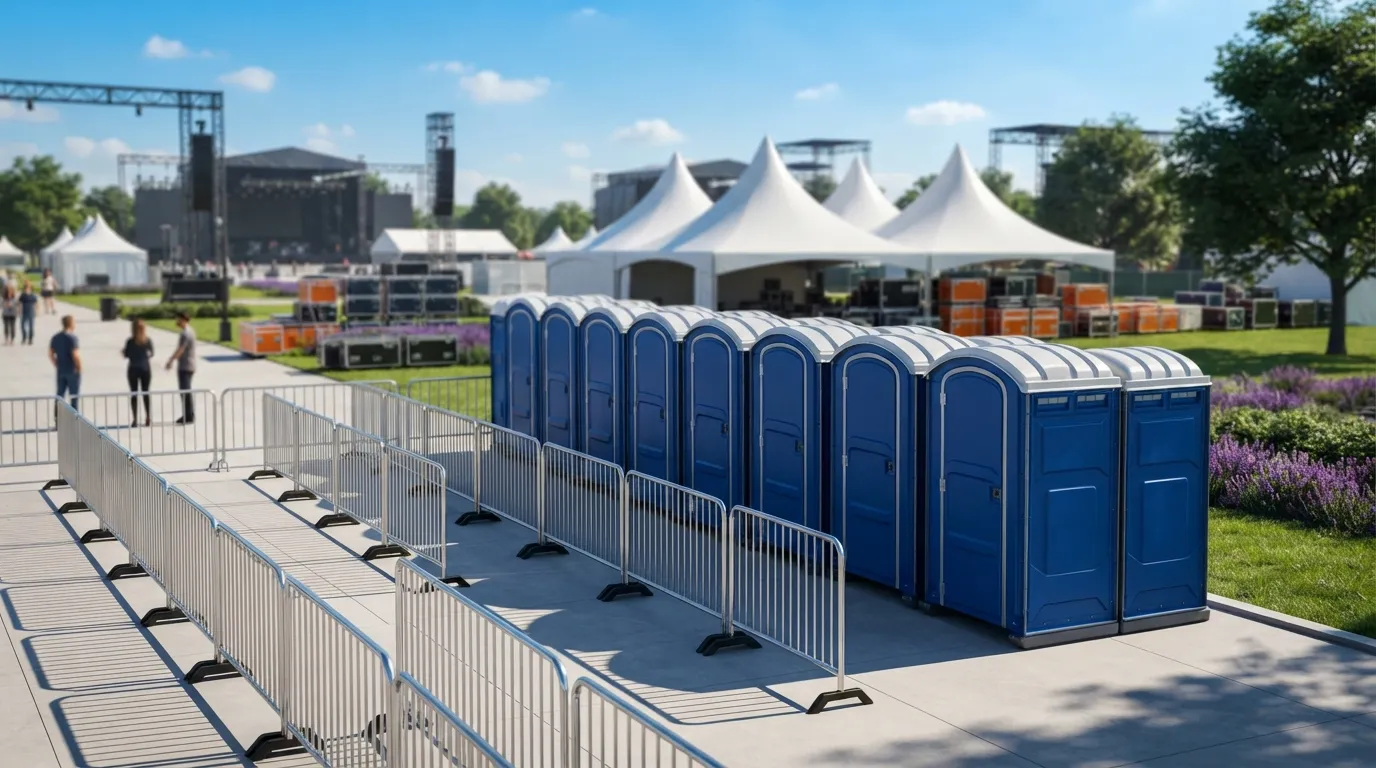
Placement in the public right-of-way, on a sidewalk, or in a street lane needs confirming with the City of Aurora before delivery, since permit rules for that kind of siting are not something we'll guess at here. The same caution applies to fencing and dumpsters set anywhere near a curb or public path. If your event needs a temporary fence rental or crowd control barrier rental around the restroom area, check placement against any permit the city requires for that footprint too. For most residential driveways and private construction lots in Aurora, right-of-way rules don't come into play at all, and you can set a porta john rental or portable restroom rental wherever ground and access allow. When in doubt, our porta potty permit requirements page and dumpster permit requirements page both point you toward the right city contact before delivery day.
How much clearance does delivery need?
A roll-off delivery needs about 60 feet of straight clearance behind the truck, and porta potty trucks want a similar straight shot rather than a tight backup through parked cars or narrow alleys. This matters just as much for a jobsite near Aetna Estates, about 4.7 miles northeast of central Aurora, as it does downtown. Overhead lines and low branches count against that clearance too, since the truck boom needs vertical room as well as a straight run. If the site is remote, like a property closer to Watkins, 13.3 miles east, confirm the access road can carry a loaded truck before delivery day so nobody's rescheduling. For larger events, an 8 stall restroom trailer or 4 stall restroom trailer needs more room still, closer to what a small moving truck requires, and a mobile office trailer rental on the same lot only tightens things further. Site plans that mix a storage container rental, a restroom trailer, and a dumpster should sketch the truck paths before anything gets dropped, not after.
How many porta potties does OSHA require on a job site?
OSHA 1926.51(c) sets a baseline of one toilet for 20 or fewer workers, then one toilet seat and one urinal per 40 workers as crew size climbs to 200. Above that, it's one seat and urinal per 50. Full breakdown is on our OSHA portable toilet requirements page.
Does a handwashing station need to sit next to the toilet?
Not by rule, but it should sit close enough that workers actually use it. 29 CFR 1910.141(d)(2) requires soap and towels or a hand-drying device, not sanitizer alone. See handwashing station requirements for placement near paint or coating work under 1926.51(f)(1).
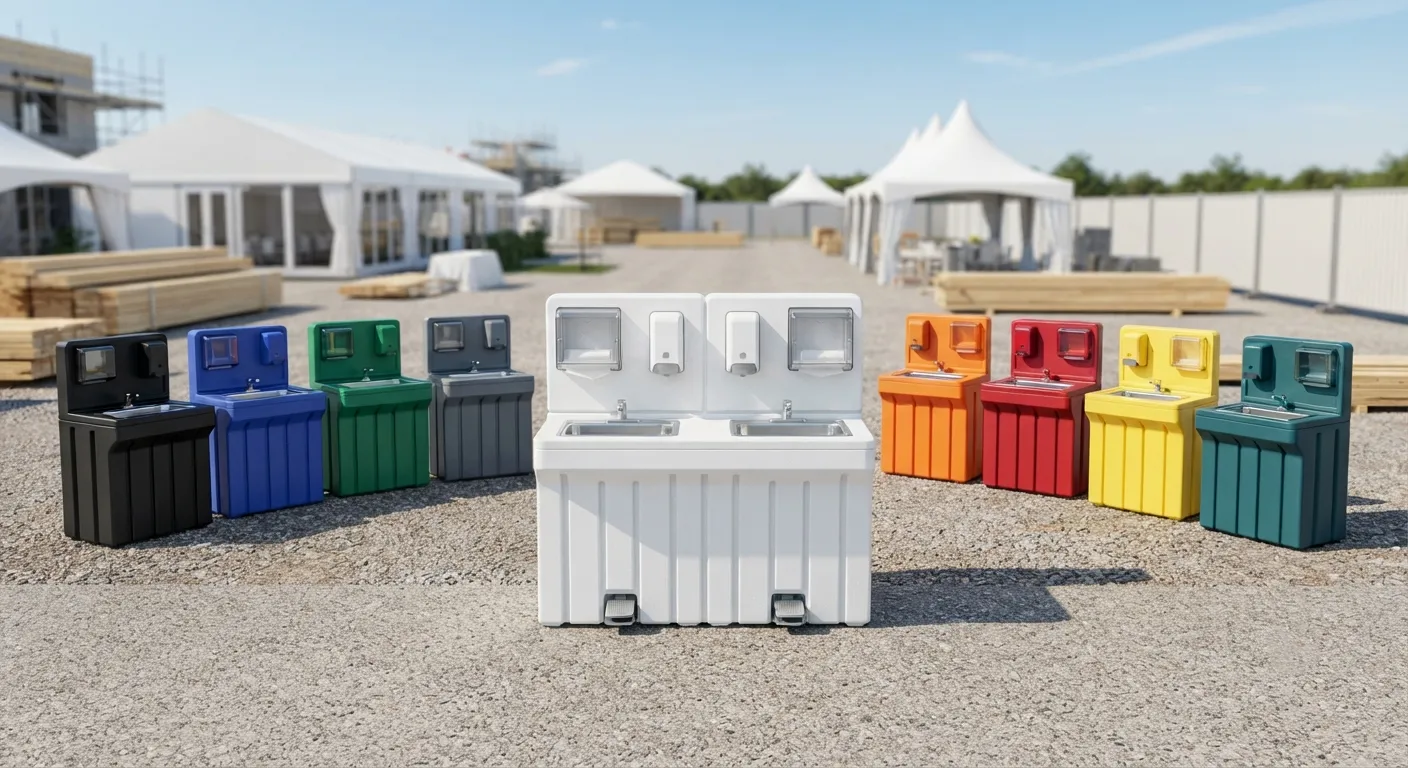
Where can Ozark River portable sink replacement parts be sourced for a rented unit?
Ask Aurora Porta Pros directly if a rented handwashing unit needs parts. We carry service parts for our own handwashing station rental fleet and swap faulty units rather than field-repair on site.
Do mobile office trailer doors get replaced if damaged on site?
Yes, damaged doors on a rented mobile office trailer rental get swapped by our crew, not left for the renter to fix. Report damage as soon as it happens so a replacement door can be scheduled with the next service visit.
Is septic pumping placement different from porta potty placement?
Yes. Septic access points are fixed by the tank's location, not chosen fresh each rental. A septic pumping service call needs truck access to that existing point, similar clearance rules to a portable placement, typically pumped every 3 to 5 years.
Next step
Get a delivery date
Tell us the address, the dates and the headcount. We size the order and confirm the route.