
Do you need a permit for a porta potty in Aurora?
Placement on your own property, like a construction lot or a backyard for a party, typically doesn't trigger a city permit. The moment a unit sits in the public right of way, on a street, sidewalk or curb lane, that changes, and Aurora Porta Pros treats this as NOT VERIFIED until confirmed directly with the city for your address. This mirrors a pattern we see in comparable cities: a jersey city dumpster permit is often required for street placement even when the same equipment on a private driveway needs nothing. If your project sits close to a curb cut or a shared alley, check with Aurora before delivery. See our porta potty placement guide for how crews decide where a unit goes on site, and our porta potty rental checklist for what to confirm before the truck shows up. A short driveway note now saves a reschedule later. This applies whether you're setting up a standard porta potty rental for a remodel or a bank of units for a weekend event near Cherry Creek, 16.2 miles southwest of central Aurora.
What are the porta potty placement rules on a job site?
Placement rules on active construction sites come from OSHA, not the city, and they're about worker access more than curb space. OSHA 1926.51(c) sets toilet counts by crew size: one facility for 20 workers or fewer, then additional seats as the crew grows past that. If your project also involves heavier work, our construction site services page and OSHA Portable Toilet Requirements guide break down counts by trade and crew. A standard unit runs about 44 by 48 inches on the ground and stands roughly 92 inches tall, so give it clear ground and stable footing, per ADA Standards 302.1 on firm, slip-resistant surfaces where accessible units are involved. If you're placing an ADA accessible porta potty, ADA Standards 213.2 requires at least one accessible unit in any cluster, even a small one. Roll-off dumpster placement has its own footprint concern: delivery needs about 60 feet of straight clearance behind the truck, which matters as much for a roll-off dumpster rental in Aurora as it does for a dumpster permit conversation in Delaware or anywhere else with tight residential streets.
Do you need a permit for a dumpster on the street?
Street placement is usually the trigger, same as with portable toilets. A dumpster sitting entirely on your own driveway or lot typically needs no city sign-off. Put it in a lane, on a sidewalk, or anywhere within the public right of way, and that's a call to the city first, not after the construction dumpster rental shows up. This is consistent with how permit for dumpster on street questions get handled in most jurisdictions, whether it's a Delaware suburb or Aurora proper. Our dumpster permit requirements page walks through what to check locally, and dumpster weight limits and what cannot go in a dumpster cover the two most common fines that have nothing to do with placement. Sizing matters too: compare a 10 yard dumpster rental against a 20 yard dumpster rental or 30 yard dumpster rental using our dumpster sizes and dimensions chart before you commit to street space you may not be able to use.
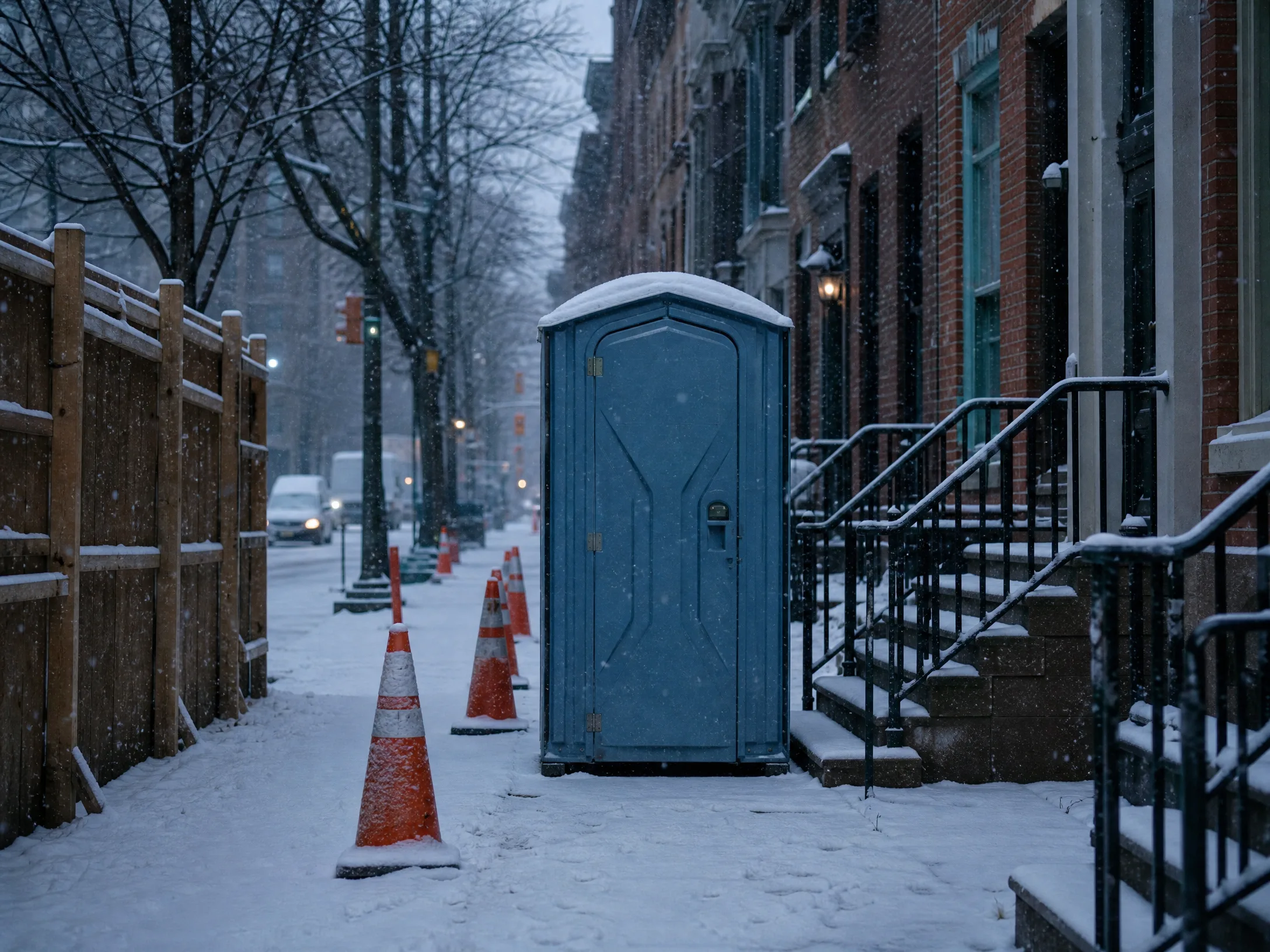
Are permits needed for temporary power poles or fencing?
A temporary power pole permit is a common ask on job sites that need service before permanent power is run, and it's a separate process from anything sanitation-related; check with Aurora's building or electrical permitting desk directly, since we don't carry those numbers here. Electrical work on site still falls under OSHA 1926.404(b)(1)(ii) for GFCI protection regardless of permit status. Temporary fencing, covered on our temporary fence rental and chain link temporary fence pages, follows the same private-lot-versus-right-of-way logic: OSHA 1926.202 governs barricade construction standards on active sites, but whether the fence itself needs a city permit depends on whether it crosses a sidewalk or property line. Storage containers and mobile office trailer rental units follow similar placement logic; check our storage container rental page for setup notes. For pricing across unit types, see Porta Potty Rental Cost in Aurora, CO, our cluster pillar for anything permit-adjacent and budget-related.
| unit | duration | typical price |
|---|---|---|
| standard | day | $150 |
| standard | week | $200 |
| ada | day | $230 |
| dumpster | week | $600 |
| fence | day | $50 |
Does a residential backyard rental need a permit?
Usually not. A unit placed entirely on private property for a party or renovation typically doesn't need city sign-off in Aurora. The exception is if delivery trucks need to block a lane temporarily; ask about that when booking a home renovation porta potty or event rental.
How far in advance should I confirm placement with the city?
Call before you book delivery, ideally a week out for standard jobs and sooner for events near shared streets. Aurora Porta Pros can flag likely right-of-way situations during your quote, but the city has final say on curb and sidewalk placement.
Do event rentals near public parks need special permits?
Often yes, since parks and public venues frequently require their own use permits separate from portable toilet placement. Check with the venue and the city together. Our event restroom rental and festival restroom rental pages cover planning timelines.
What OSHA rule governs toilet counts on a construction crew?
OSHA 1926.51(c) sets the ratio: one facility per 20 workers or fewer, scaling up with crew size. This is a federal labor standard, separate from any city permit question, and applies regardless of where in Aurora the site sits.
Does a grease trap or septic pump-out need a city permit?
Pumping itself generally doesn't require a permit; it's a maintenance service. See septic pumping service and grease trap pumping for scheduling, since a typical residential tank is pumped every 3 to 5 years.
Next step
Get a delivery date
Tell us the address, the dates and the headcount. We size the order and confirm the route.