
How do porta potties work?
The design is simple on purpose. A molded plastic shell sits over a holding tank, and the seat opens straight into it. There's no flush, no water line, nothing to freeze or back up in a hard Colorado winter, which is also covered on our porta potty in winter page. The blue liquid in the tank isn't just for color. It's a chemical treatment that suppresses odor and starts breaking down waste between service visits. For a construction worker on a job site outside Aurora, that means the unit works the same on day one as it does after a week of hard use. Service intervals matter here: ANSI/PSAI Z4.3 sets a baseline of one service visit per week for up to 10 users across a 40 hour week, which is why crews with more workers need more units or tighter service schedules. You can check your own math with how many porta potties do I need before you book. Standard units run about 44 by 48 inches on the ground and stand roughly 92 inches tall, so they fit tight urban lots common around downtown Aurora without eating the whole site.
How do flushable porta potties work?
A deluxe or flushable unit adds a small onboard freshwater tank and a hand pump or foot pump that pushes a rinse of water through the bowl after use, dropping waste into the same sealed holding tank below. It feels closer to a real bathroom, and that's the point for weddings and upscale events. Our deluxe flushable porta potty page breaks down the features, and pricing sits separate from standard units. If you're weighing options for a backyard wedding near Aurora, the wedding restroom rental and event restroom rental pages cover setup differences. Restroom trailers take this further with multiple stalls, running water, and interior lighting; see the restroom trailer rental or luxury restroom trailer options if flush toilets and sinks matter more than budget. A 2 stall or 4 stall layout works for smaller gatherings; larger festivals often need the 8 stall restroom trailer instead.
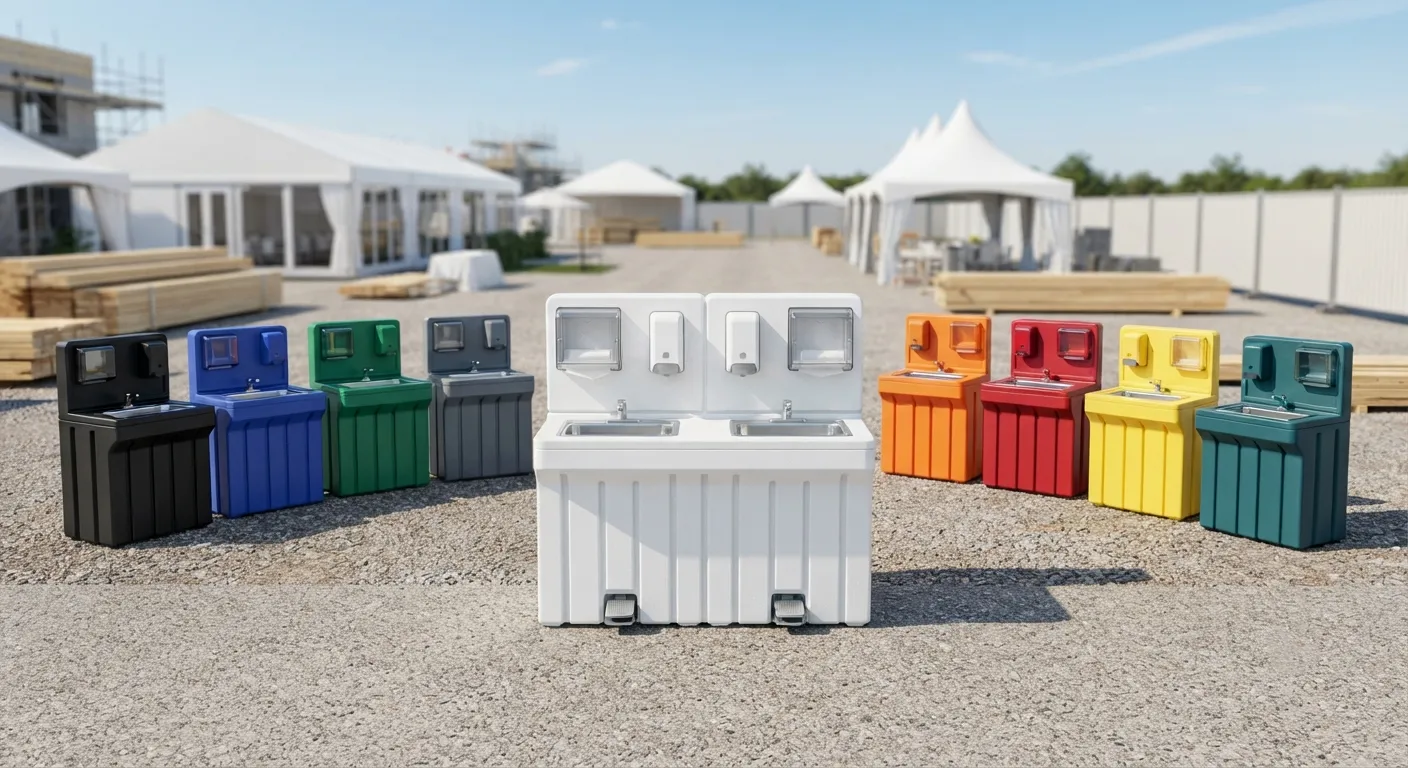
How does a portable sink work?
A portable sink is its own sealed system, built around a fresh water tank, a foot pump or hand pump to push water to the faucet, and a separate gray water tank underneath to catch the runoff. Nothing connects to a building's plumbing. This matters for compliance: 29 CFR 1910.141(d)(2) requires soap and towels or a hand drying device at washing facilities, and hand sanitizer alone doesn't satisfy that rule. Job sites doing painting, coating, herbicide or insecticide work fall under OSHA 1926.51(f)(1), which specifically requires washing facilities for those contaminant tasks. Our handwashing station rental and portable sink rental pages cover unit options, and handwashing requirements walks through when a sink is required versus a hand sanitizer stand under hand sanitizer station rental. Farms and agricultural operations have their own standard: OSHA 1928.110 requires potable water, toilets, and handwashing for hand-labor employees, at one facility per 20 workers, within a quarter mile walk, which is why our farm and agricultural restrooms page exists as a separate service.
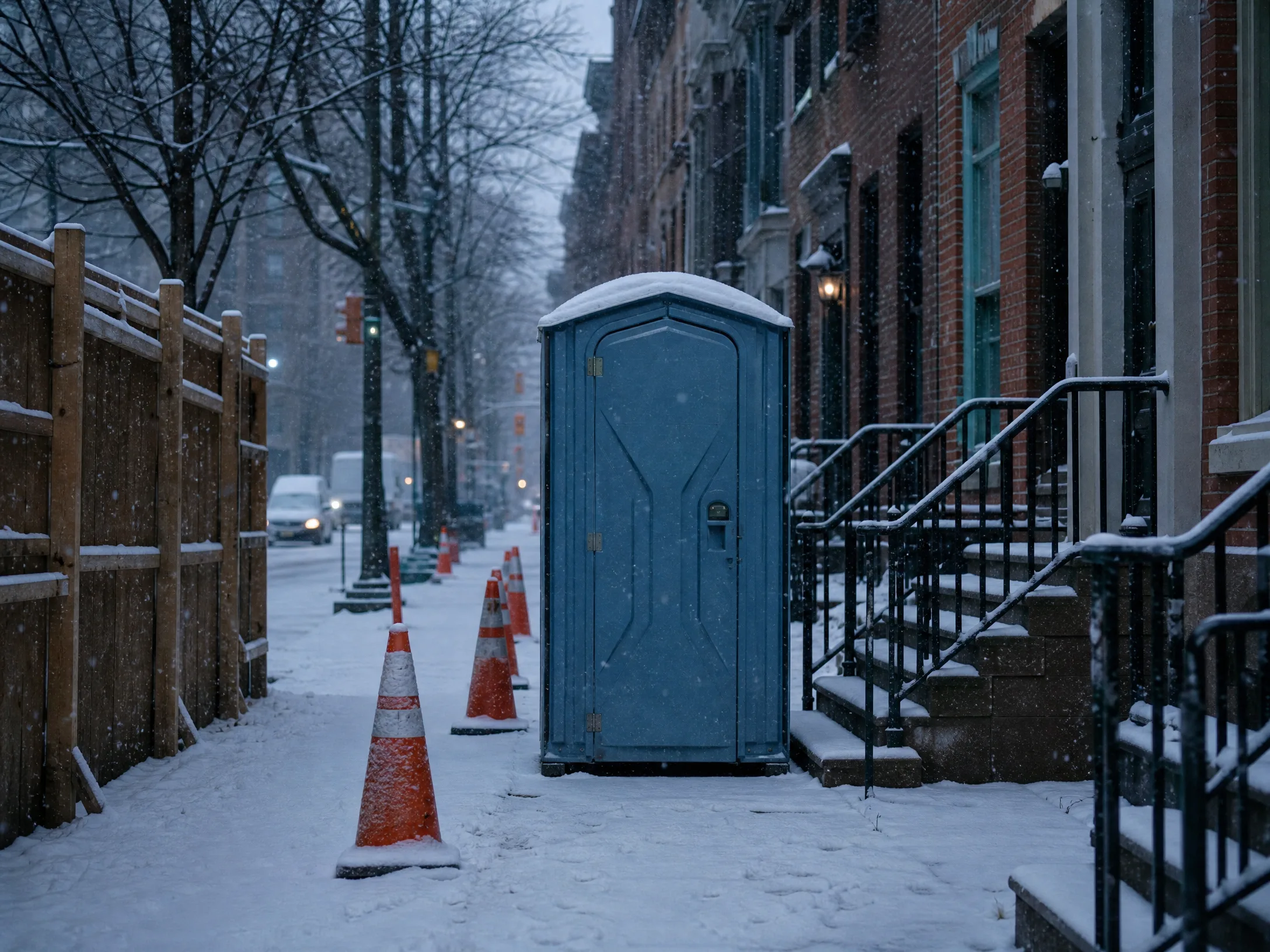
Why do construction sites need porta potties?
Because OSHA 1926.51(c) sets hard ratios: one toilet for 20 workers or fewer, then one toilet and one urinal per 40 workers up to 200, and one per 50 beyond that. A construction worker running to a porta potty across a busy Aurora job site loses less time when units sit close to the work zone, which is why placement planning matters as much as unit count. Our porta potty placement guide covers clearance and ground surface needs, and ADA Standards 302.1 require a stable, firm, slip-resistant surface under any accessible unit, with a 60 inch turning circle per ADA Standards 304.3.1. For larger crews, construction site services and construction dumpster rental usually get bundled with restroom rental in the same delivery. Full OSHA breakdowns live on OSHA portable toilet requirements, and general service intervals are explained on how often are porta potties cleaned.
| unit | duration | typical price |
|---|---|---|
| standard | day | $150 |
| standard | week | $200 |
| standard | month | $200 |
| deluxe | week | $250 |
| ada | week | $185 |
Prices vary by job length and site conditions; full detail sits on porta potty rental cost, porta potty rental per day, and monthly porta potty rental.
Do porta potties smell?
A well-serviced unit shouldn't smell strongly. The blue chemical suppresses odor between pump-outs, and regular service keeps buildup from reaching problem levels. Our do porta potties smell page covers what causes smell and how service frequency fixes it. Heat and low service frequency are the usual culprits.
How do camping porta potties work?
Same core design as job site units, just smaller and often self-contained for portability. A sealed tank holds waste, and some camping units use the same chemical treatment as standard rentals. See camping porta potty for options sized for remote sites without water access.
What chemicals go in a porta potty?
A blue deodorizing and waste-breakdown chemical goes into the holding tank at setup and gets refreshed at each service visit. It's not something a renter buys separately. Aurora Porta Pros handles chemical treatment as part of every service call, whether the unit sits in Aurora or out toward Aetna Estates, 4.7 miles northeast.
Is a septic tank the same as a porta potty tank?
No. A residential septic tank is a fixed underground system, typically pumped every 3 to 5 years depending on tank size and household use. Porta potty tanks are portable and serviced weekly. See septic pumping service or how often to pump a septic tank for septic-specific detail.
Are porta potties ADA accessible?
Some units are. ADA Standards 213.2 requires at least 5 percent of clustered single-user units to be accessible, never fewer than one, with a 32 inch clear door opening under ADA Standards 404.2.3. Our ADA accessible porta potty page covers specs and ADA restroom requirements covers the full standard.
Next step
Get a delivery date
Tell us the address, the dates and the headcount. We size the order and confirm the route.